Ebook Free to Learn: Why Unleashing the Instinct to Play Will Make Our Children Happier, More Self-Reliant, and Better Students for Life, by Pet
Simply connect your tool computer or device to the net attaching. Obtain the modern innovation making your downloading and install Free To Learn: Why Unleashing The Instinct To Play Will Make Our Children Happier, More Self-Reliant, And Better Students For Life, By Pet finished. Also you do not intend to read, you can directly close guide soft documents as well as open Free To Learn: Why Unleashing The Instinct To Play Will Make Our Children Happier, More Self-Reliant, And Better Students For Life, By Pet it later. You can likewise easily obtain guide everywhere, since Free To Learn: Why Unleashing The Instinct To Play Will Make Our Children Happier, More Self-Reliant, And Better Students For Life, By Pet it remains in your gadget. Or when remaining in the office, this Free To Learn: Why Unleashing The Instinct To Play Will Make Our Children Happier, More Self-Reliant, And Better Students For Life, By Pet is additionally suggested to review in your computer device.
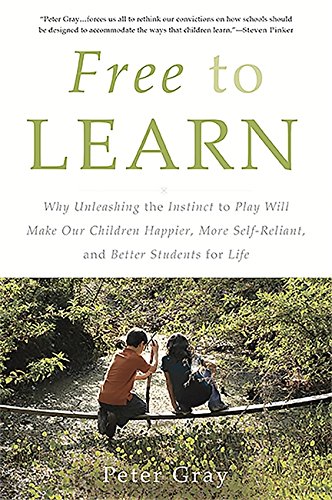
Free to Learn: Why Unleashing the Instinct to Play Will Make Our Children Happier, More Self-Reliant, and Better Students for Life, by Pet

Ebook Free to Learn: Why Unleashing the Instinct to Play Will Make Our Children Happier, More Self-Reliant, and Better Students for Life, by Pet
Find much more encounters and also understanding by reading the book qualified Free To Learn: Why Unleashing The Instinct To Play Will Make Our Children Happier, More Self-Reliant, And Better Students For Life, By Pet This is an e-book that you are searching for, right? That corrects. You have actually come to the best site, after that. We constantly give you Free To Learn: Why Unleashing The Instinct To Play Will Make Our Children Happier, More Self-Reliant, And Better Students For Life, By Pet and one of the most favourite books on the planet to download and also took pleasure in reading. You might not dismiss that visiting this set is a purpose and even by unexpected.
Why should be Free To Learn: Why Unleashing The Instinct To Play Will Make Our Children Happier, More Self-Reliant, And Better Students For Life, By Pet in this site? Obtain much more profits as exactly what we have actually told you. You could find the other reduces besides the previous one. Reduce of obtaining guide Free To Learn: Why Unleashing The Instinct To Play Will Make Our Children Happier, More Self-Reliant, And Better Students For Life, By Pet as what you want is also given. Why? We offer you numerous type of guides that will not make you really feel bored. You could download them in the link that we give. By downloading Free To Learn: Why Unleashing The Instinct To Play Will Make Our Children Happier, More Self-Reliant, And Better Students For Life, By Pet, you have actually taken the right way to pick the simplicity one, as compared to the trouble one.
The Free To Learn: Why Unleashing The Instinct To Play Will Make Our Children Happier, More Self-Reliant, And Better Students For Life, By Pet tends to be excellent reading book that is easy to understand. This is why this book Free To Learn: Why Unleashing The Instinct To Play Will Make Our Children Happier, More Self-Reliant, And Better Students For Life, By Pet becomes a preferred book to read. Why do not you really want turned into one of them? You can enjoy reading Free To Learn: Why Unleashing The Instinct To Play Will Make Our Children Happier, More Self-Reliant, And Better Students For Life, By Pet while doing other tasks. The visibility of the soft documents of this book Free To Learn: Why Unleashing The Instinct To Play Will Make Our Children Happier, More Self-Reliant, And Better Students For Life, By Pet is sort of obtaining encounter effortlessly. It includes exactly how you need to conserve the book Free To Learn: Why Unleashing The Instinct To Play Will Make Our Children Happier, More Self-Reliant, And Better Students For Life, By Pet, not in racks certainly. You may save it in your computer device and gizmo.
By conserving Free To Learn: Why Unleashing The Instinct To Play Will Make Our Children Happier, More Self-Reliant, And Better Students For Life, By Pet in the device, the way you read will also be much less complex. Open it and also start reading Free To Learn: Why Unleashing The Instinct To Play Will Make Our Children Happier, More Self-Reliant, And Better Students For Life, By Pet, straightforward. This is reason we recommend this Free To Learn: Why Unleashing The Instinct To Play Will Make Our Children Happier, More Self-Reliant, And Better Students For Life, By Pet in soft file. It will not disrupt your time to obtain guide. Additionally, the on-line system will additionally ease you to look Free To Learn: Why Unleashing The Instinct To Play Will Make Our Children Happier, More Self-Reliant, And Better Students For Life, By Pet it, also without going someplace. If you have connection internet in your office, house, or gadget, you can download Free To Learn: Why Unleashing The Instinct To Play Will Make Our Children Happier, More Self-Reliant, And Better Students For Life, By Pet it directly. You might not additionally wait to get the book Free To Learn: Why Unleashing The Instinct To Play Will Make Our Children Happier, More Self-Reliant, And Better Students For Life, By Pet to send by the vendor in other days.
In Free to Learn, developmental psychologist Peter Gray argues that in order to foster children who will thrive in today's constantly changing world, we must entrust them to steer their own learning and development. Drawing on evidence from anthropology, psychology, and history, he demonstrates that free play is the primary means by which children learn to control their lives, solve problems, get along with peers, and become emotionally resilient. A brave, counterintuitive proposal for freeing our children from the shackles of the curiosity-killing institution we call school, Free to Learn suggests that it's time to stop asking what's wrong with our children, and start asking what's wrong with the system. It shows how we can act—both as parents and as members of society—to improve children's lives and to promote their happiness and learning.
- Sales Rank: #40980 in Books
- Brand: Gray Peter
- Published on: 2015-02-10
- Released on: 2015-02-10
- Original language: English
- Number of items: 1
- Dimensions: 8.50" h x 1.00" w x 5.50" l, .0 pounds
- Binding: Paperback
- 288 pages
- Free to Learn Why Unleashing the Instinct to Play Will Make Our Children Happier More Self Reliant and Better Students for Life
Review
Laurette Lynn, Unplugged Mom.com
"[A] well written, well organized and beautifully stated piece of work.... I emphatically recommend this book for any parent as well as any educator or anyone interested in improving education for our society."
Mothering.com
"[Free to Learn is] a powerful agent of transformation. I'd like to put a copy in the hands of every parent, teacher, and policy maker."
Publishers Weekly
“[E]nergetic...Gray powerfully argues that schools inhibit learning.... [Gray's] vivid illustrations of the ‘power of play' to shape an individual are bound to provoke a renewed conversation about turning the tide in an educational system that fosters conformity and inhibits creative thinking.”
Frank Forencich, author of Exuberant Animal and Change Your Body, Change the World
“Free to Learn is a courageous and profoundly important book. Peter Gray joins the likes of Richard Louv and Alfie Kohn in speaking out for a more humane, compassionate and effective approach to education.”
David Sloan Wilson, SUNY Distinguished Professor of Biology and Anthropology, Binghamton University, and author of Evolution for Everyone
“The modern educational system is like a wish made in a folk tale gone horribly wrong. Peter Gray's Free to Learn leads us out of the maze of unforeseen consequences to a more natural way of letting children educate themselves. Gray's message might seem too good to be true, but it rests upon a strong scientific foundation. Free to Learn can have an immediate impact on the children in your life.”
Roberta Michnick Golinkoff, author of Einstein Never Used Flash Cards and A Mandate for Playful Learning in Preschool
“A compelling and most enjoyable read. Gray illustrates how removing play from childhood, in combination with increasing the pressures of modern-day schooling, paradoxically reduces the very skills we want our children to learn. The decline of play is serious business.”
Steven Pinker, Harvard College Professor of Psychology, Harvard University, and author of How the Mind Works
“Peter Gray is one of the world's experts on the evolution of childhood play, and applies his encyclopedic knowledge of psychology, and his humane voice, to the pressing issue of educational reform. Though I am not sure I agree with all of his recommendations, he forces us all to rethink our convictions on how schools should be designed to accommodate the ways that children learn.”
Lenore Skenazy, author of Free-Range Kids
“All kids love learning. Most don't love school. That's a disconnect we've avoided discussing — until this lightning bolt of a book. If you've ever wondered why your curious kid is turning into a sullen slug at school, Peter Gray's Free to Learn has the answer. He also has the antidote.”
About the Author
Peter Gray is a research professor in the Department of Psychology at Boston College. The author of Psychology, a highly regarded college textbook, he writes a popular blog called Freedom to Learn for Psychology Today. He lives in Shrewsbury, Massachusetts.
Most helpful customer reviews
150 of 153 people found the following review helpful.
Compelling…though I don’t fully agree
By B. Dixon
If I had to summarize the first part of Peter Gray’s book in a few words, it would be something like the following: “Traditional schools are too authoritarian. Traditional education stifles children’s curiosity and desire to learn by telling them what to study and by teaching them to do as they are told.” This part of the book, where he presents his understanding of the historical and psychological causes and human impact of traditional schooling (whether public or private), is extraordinarily compelling, and has forever changed my perspective on traditional education. Having read Dr Gray’s book, I will no longer take for granted that the use of a standard curriculum for everyone is a good idea, and I am thoroughly convinced that extinguishing a person’s natural desire to learn is at the root of many if not every unmotivated student. Whatever else we do, we must keep our children – and ourselves – wanting to learn, which is easy, Dr Gray argues, if we allow everyone to learn what about what interests them.
Although equally well-argued, I was less convinced by the second part of his book, his proposal for a solution. Although I am now thoroughly convinced that the student needs to be significantly involved in setting the direction of his learning (I would add, to the extent possible from his age and level of maturity), the specific implementation of this practice I believe needs some further refinement. Essentially, Dr Gray argues for the widespread introduction of “unschooling” environments and specifically schools like the Sudbury Valley schools that encourage each student from a very early age to choose on their own what to study, and how. I had been unaware of the unschooling movement and the Sudbury Valley schools prior to reading this book, and so began my own investigation on these topics. Among other things, I learned that we live near one of these schools, and so I went to check it out. After observing the school and after further reading and reflection, I came to the conclusion that there are at least two issues with Dr’s Gray’s “unschooling” approach as a solution for some of the problems with traditional schooling.
The first problem is that this type of schools (deliberately?) appears to lack sufficient resources, both human and otherwise. If children are in an environment that includes a kitchen and a shop but not a PhD in mathematics, it seems highly unlikely that they will discover a natural bent for quantum physics and calculus. I remember seeing an extraordinary video clip years ago where Jesse Jackson led a tour of two cross town public high schools, one white and one black, showing the dramatic differences in facilities available. (The white high school included computers, sophisticated science equipment, a beautiful track and an Olympic size pool, while the black high school had outdated textbooks, less rigorous academics and a dramatically lower graduation rate.) Perhaps the local Sudbury Valley-type school I saw was unique, but I think that unless we are simultaneously offering them the best possible resources, our children will never rise to their full potential via unschooling.
The second issue I have with unschooling as advocated by Dr Gray is his excessive adulation for learning from one’s childhood peers. It is certainly true that kids can and do learn things from their peers, but many of those things (the pressure to conform, bullying, and drug use, to name a few) are challenges that I believe are better handled with the support of caring adults. It would be interesting to put Dr Gray in the same room with Gordon Neufeld and Gabor Mate, the authors of another excellent book, Hold On to Your Kids. This book is an excellent complement to the many positive/attachment parenting books now available (Peaceful Parents Happy Kids, Playful Parenting, and Two Thousand Kisses a Day are among my favorites). Neufeld and Mate’s book, also well worth the time, focuses on the external pressure from peers that have been affecting the last few generations of children, and not in a good way. Although both books have their share of unsubstantiated assertions, I found myself agreeing much more often with Drs Neufeld and Mate than with Dr Gray regarding peer relationships. Interestingly, both books are highly critical of our current traditional method of schooling, but they come to very different conclusions about what to do about it. It would certainly be interesting to read these two books together.
Since presumably many readers of this review will not be visiting a Sudbury Valley type school in person, I thought it might be worth closing with some further reflections on my visits there. I was able to visit the local Sudbury Valley type school three times, and twice was able to spend a few hours interacting with students of various ages and reviewing the artifacts of various processes including the judicial committee. The children I spoke with seemed generally satisfied with attending this school and many were reasonably articulate as to its value to them, but to me many of them appeared as if they were drifting. Few seemed to have identified areas of learning about which they were passionate, or even especially interested in. The minutes from the judicial committee also made it clear that although the authority of the school may rest with the student-faculty committee, rules and constraints on behavior are as prevalent as in a traditional school. In looking at educational options for my son, I have now visited a fairly large number of schools. For whatever it is worth, my most important litmus test for a school has become to see whether the students and staff are going about their day with enthusiasm and joy. Sadly, it is not something I typically see, and it was not apparent at this school either.
Back to Dr Gray’s book. In spite of my disagreement with some of Dr Gray’s conclusions, I have decided I must give it a 5-star rating because of his cogent presentation of his ideas and because those ideas have forever altered my views on traditional schooling. (As I learned, many of those ideas were initially presented in his Psychology Today column, but I did find that the book presentation of those ideas really strengthened and solidified his views in a way that reading the columns alone did not.) I am glad that he wrote it, and would recommend it to anyone trying to understand how we learn best.
3 of 3 people found the following review helpful.
How kids use play and curiosity to learn, and what this means to parents
By David Dennis
Kids have endless curiosity. They love to play, explore and enjoy the world. And then we send them to school and they become sullen, miserable shadows of themselves. And they don't learn - despite all our supposed best efforts, their level of literacy and ability is lower than previous generations.
So yes, school makes kids miserable, and yet our property tax invoices show that we spend more and more resources to get less and less. Why has nobody questioned this and dug into these facts?
Peter Gray has, and it all started with his own kid, who was an endless nuisance to his school and its teachers and administrators. After research, he found the Sudbury Valley School in Massachusetts, whose child-centered principles upend the entire educational establishment and its endless drab classrooms and monotonous tests. Could it work, he wondered? Certainly his kid had nowhere to go but up.
So how does Sudbury Valley work? It gives kids complete freedom and mixes ages. Younger kids notice things older kids are doing, and are highly motivated to do them too. So when someone creates art, other students hang on to try and figure out how it's done. Eventually books are discovered, and they get the idea that those odd symbols on the page actually should mean something. Slowly but surely they puzzle it out, and eventually become full-fledged readers, all on their own and because they are motivated by a desire to do things that matter to them.
In short, kids are wired evolutionarily to learn and grow. They are not wired to sit in rows and watch as a leader demonstrates something. They are wired to figure it out themselves. Think about how you figure out a new computer program or skill. You watch others do it. You read books about it. You learn. Learning doesn't take being forced to sit in rows in a classroom, and in the end most learning doesn't take place that way at all.
This is a fascinating book, the first I've read that gives me a sensible explanation of why all the time, effort and money that we have poured into our schools has created such dreadful results. And it provides an upbeat and sensible way forward. Expose kids to more play, for that is how they learn to cope with real-world problems. And don't try and mold them into little clones of yourself, or fear every last potential hazard. The experiences you deprive them of by trying to keep them totally safe are the ones that truly matter in their development.
I urge every parent to read and understand this book. An engrossing read and a great way forward for kids and parents alike.
1 of 1 people found the following review helpful.
amazing, revolutionary book
By R. Bermudez
This is a groundbreaking, amazing, revolutionary book. I personally was homeschooled and often felt like I was missing out on the full wealth of information that would have been available to me in a standard style school. But thinking back on it I really had such a well rounded education and more life experience than any of my same-age public schooled friends. I assumed though when I had kids that they would go to some charter/private school (public schools around here are awful), but started really being disillusioned when I put my water loving 3yo daughter in swim lessons and we had such a bad experience that the teachers made me to feel frustrated with my daughter, I started pressuring her and she closed down even more, they also put me in a position of either making excuses for her or feeling like she wasn't as smart as I really felt she was. This trend continued when we tried ballet classes and Spanish immersion preschool. But I started to notice a trend, the teachers would get mad when she was observing rather than participating (hello? Not singing along with a song that she doesn't know, or minimalist drawing rather than coloring the whole picture [even had one teacher continue to color the rest of her picture because she did a little bit and was done]). So instead of understanding her learning style, they condemned and ridiculed her IQ and age. The understanding I have of my own daughter and her personality and learning style set me off to learn a bit more and a friend referred me to this book. I love that the book delves into hunter-gather societies and gives plenty of history, but it does seem a bit far fetched and irrelevant to someone who has grown up in such a modern society. But the research on play he gives and the life I've lived have fully persuaded me. My personal experience was that I was accepted to UC Davis, Berkeley and LA, when I filled in temporarily in HR at my previous job, they practically created a job for me begging me to stay, all with no previous HR experience. Not to say that I'm super smart, but the schooling and experience I had interacting with children of various age groups, learning from the numerous adults in my world, and being exposed to numerous activities and such definitely set me up for success.
As for my kids, I think we're leaning towards Montessori school to start out, specifically for my daughter because she is definitely a self directed learner, preferring individual assignments. But further down the road we'll definitely explore the Sudbury school near us, or at least charter/home school.
While this is a bit more revolutionary, or extreme, than I would lean, I think the ideas need to penetrate our schooling system as they currently are very dismal.
Free to Learn: Why Unleashing the Instinct to Play Will Make Our Children Happier, More Self-Reliant, and Better Students for Life, by Pet PDF
Free to Learn: Why Unleashing the Instinct to Play Will Make Our Children Happier, More Self-Reliant, and Better Students for Life, by Pet EPub
Free to Learn: Why Unleashing the Instinct to Play Will Make Our Children Happier, More Self-Reliant, and Better Students for Life, by Pet Doc
Free to Learn: Why Unleashing the Instinct to Play Will Make Our Children Happier, More Self-Reliant, and Better Students for Life, by Pet iBooks
Free to Learn: Why Unleashing the Instinct to Play Will Make Our Children Happier, More Self-Reliant, and Better Students for Life, by Pet rtf
Free to Learn: Why Unleashing the Instinct to Play Will Make Our Children Happier, More Self-Reliant, and Better Students for Life, by Pet Mobipocket
Free to Learn: Why Unleashing the Instinct to Play Will Make Our Children Happier, More Self-Reliant, and Better Students for Life, by Pet Kindle
0 komentar:
Posting Komentar